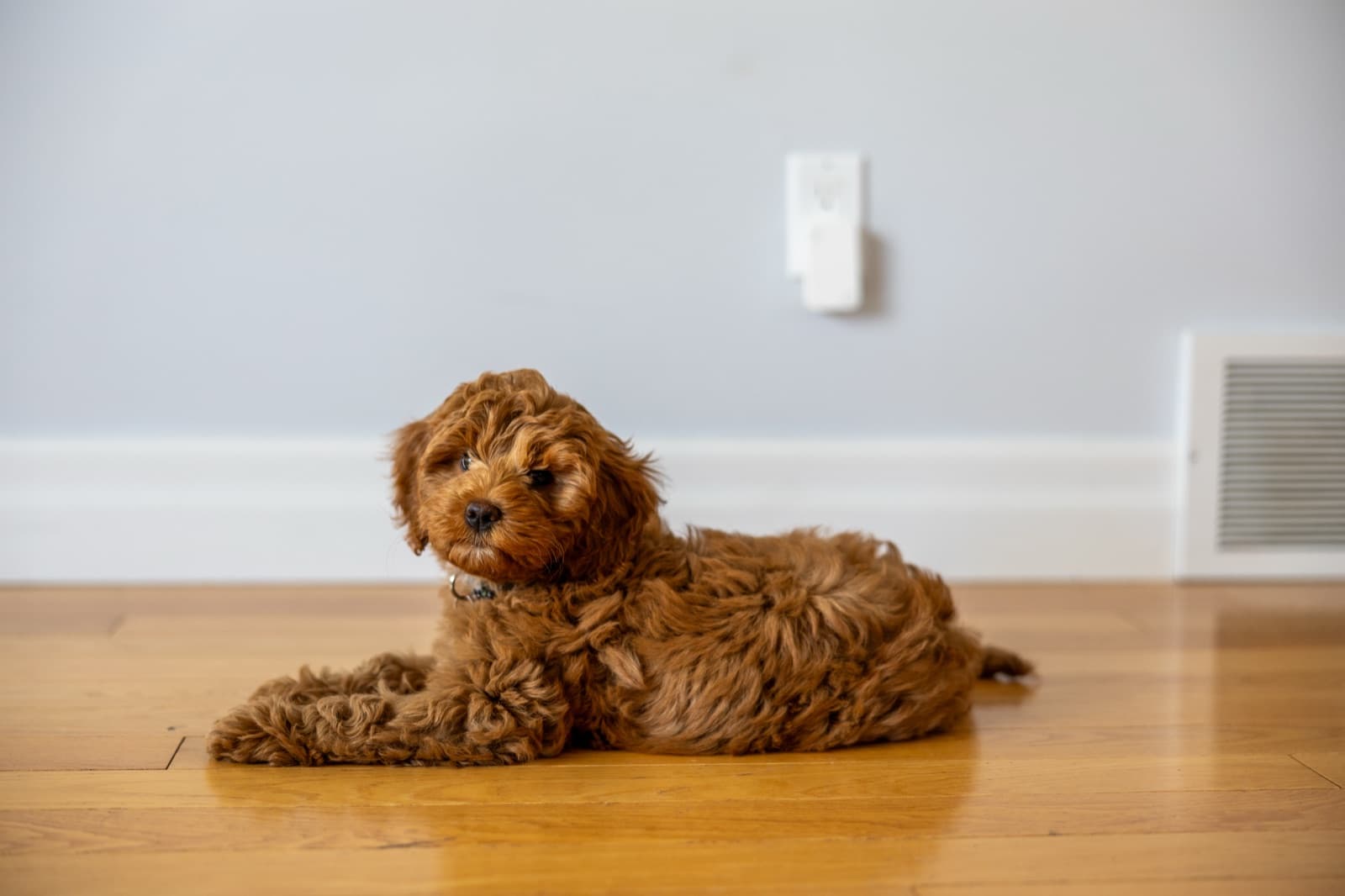
Marlowe had five accidents in the house total. Three in the first week. Two in the second. By week three she was reliable. And we never once told her she did something wrong.
I know how that sounds. But here's the thing. Every one of those accidents was our fault. Not hers. A nine-week-old puppy peeing on the kitchen floor isn't a behaviour problem. It's a timing problem. We missed a cue or we waited too long. That's it.
The system
Housetraining isn't complicated. It just has to be consistent. Here's what we did from day one.
We took Marlowe outside on a predictable schedule. After every nap. After every meal. After every play session. After every drink of water. Any time she'd been awake for more than twenty minutes without going out. In the first week that meant we were outside twelve to fifteen times a day. It felt like a lot. It was a lot. But it worked.
We picked one spot. Same patch of grass by the side door every time. She'd sniff the same area, circle, and go. When she did, she got a treat immediately. Not five seconds later. Not when we got back inside. Right there. The moment she finished. The connection has to be instant or it means nothing to a puppy.
We kept things quiet outside. No playing, no exploring, no distractions. The trip outside had one purpose. When she was done we'd celebrate briefly and head back in. Play happened later, separately. We didn't want her associating the potty trip with extended outdoor time because then she'd learn to delay going just to stay outside longer.
Supervision is the whole game
Inside the house, Marlowe was never unsupervised in the first two weeks. If she wasn't in her pen or crate, she was either in the same room as one of us or on a leash tethered to whatever adult was closest. That sounds extreme. It isn't. It's the part most people skip, and it's the reason most people have housetraining drag on for months.
A puppy who wanders into the next room and pees behind the couch isn't being defiant. She just had to go and no one was there to catch the cue. The sniffing, the circling, the sudden pause in play. Those signals last about five seconds before the squat happens. If you're not watching, you'll miss them every time.
So we watched. Constantly. And when we saw the signal, we scooped her up calmly and went straight outside. No panic. No raised voice. Just a smooth redirect. Most of the time she'd finish outside and get her treat and life continued.
When accidents happened
When she did have an accident inside, the response was the same every time. Nothing. We cleaned it up with an enzyme cleaner, made a mental note about the timing, and adjusted the schedule. That's it.
No nose rubbing. No stern voice. No “no” or “bad girl.” Punishing a puppy for a housetraining accident doesn't teach them to go outside. It teaches them that going to the bathroom near you is dangerous. They don't learn where to go. They learn to hide when they need to go. And then you find the puddle behind the couch two hours later and wonder why your housetraining isn't working.
Every accident was a data point. She went inside at 2 PM? Okay, that means the 1:45 outing was too late. Tomorrow we go at 1:30. The adjustment was always on our end, never on hers.
Rebecca's perspective
Rebecca framed it perfectly early on. She said, “You wouldn't scold a toddler for having an accident during potty training. You'd look at the schedule and figure out what you missed.” Same thing. Exactly the same thing.
Marlowe's bladder at nine weeks was physically tiny. She couldn't hold it for more than about thirty to forty minutes when she was awake and active. Expecting her to signal and wait was unreasonable. So we didn't expect it. We just managed the timing so she rarely needed to.
By week two her capacity had grown. By week three she was going to the door on her own. Not because we taught her a bell trick or a signal. Because the pattern was so consistent that the route became automatic. Outside is where this happens. Every time. She got it.
What I want you to take from this
If your puppy is having accidents in the house, you don't have a bad dog. You have a schedule problem. Go outside more often. Supervise more closely. Reward every outdoor success instantly. Clean up indoor accidents without drama.
That's it. There's no secret. There's no special trick. It's frequency, consistency, and zero punishment. It's boring. And it works faster than anything else.
Marlowe was fully reliable in under three weeks. Not because she's a genius puppy. Because we set up the environment so she almost couldn't fail. And when she did fail, we took the note and adjusted. That's the whole method.
Stay close
Weekly notes on raising Marlowe. First access when the course launches.