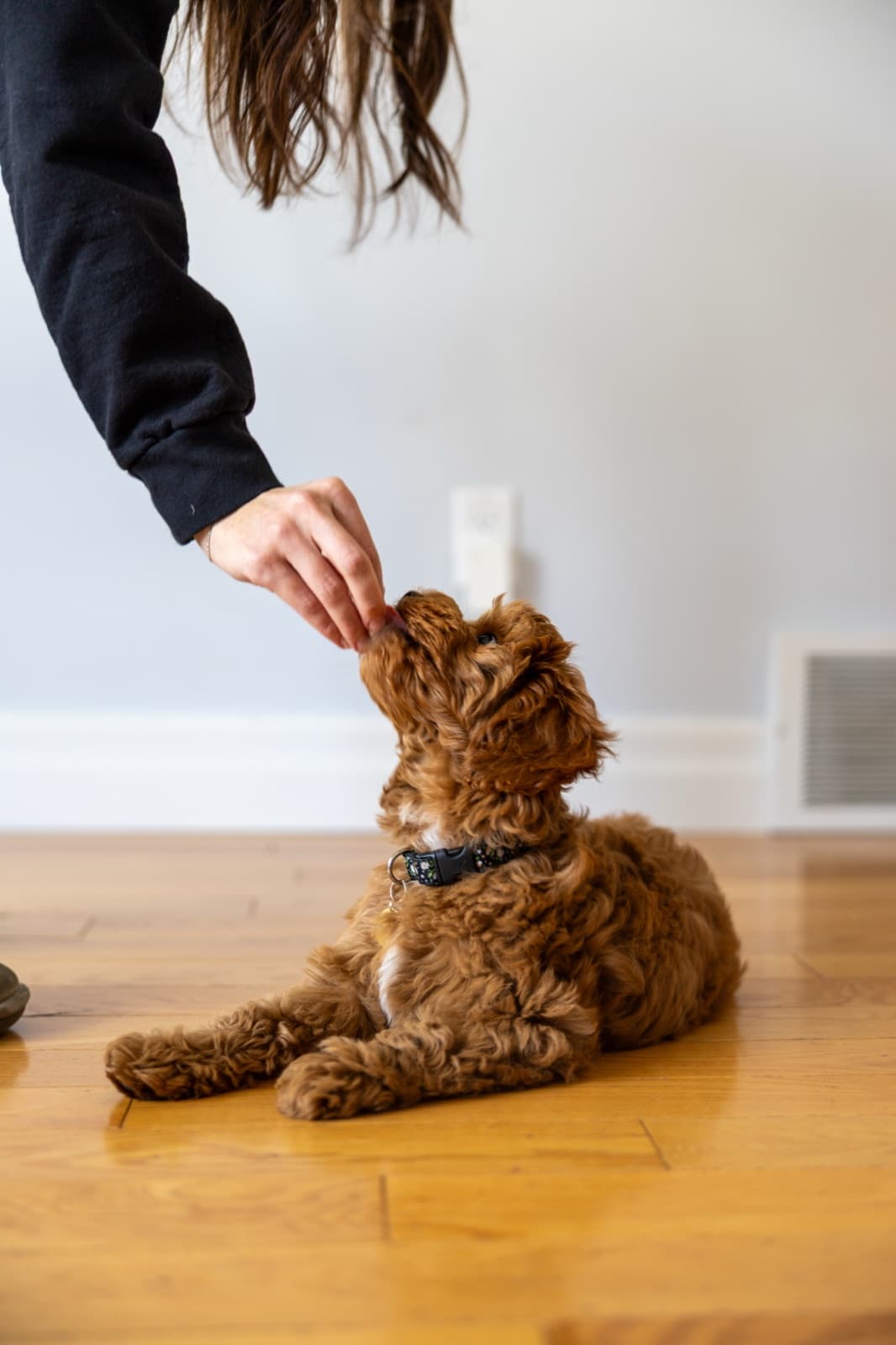
Before Marlowe came home, the boys had already been in training for two weeks. Not obedience training. Not “here's how you hold a leash” training. Body language training. How to read a dog. How to know when a puppy is done. How to be the kind of person a dog actually wants to be around.
We have two boys. Ten and twelve. They're loud and physical and they wrestle each other in the living room and slam doors and leave stuff everywhere. In other words, they're kids. And a puppy coming into that environment is either going to thrive or be completely overwhelmed. The difference is setup.
The rules came before the dog
Rebecca and I sat the boys down before Marlowe arrived and laid out the framework. These weren't suggestions. They were non-negotiable.
- No picking up the puppy.She's not a toy. If she wants to be close she'll come to you. Lifting a small dog off the ground removes their choice and teaches them that hands mean loss of control.
- No chasing.Ever. If Marlowe runs, you stop. Chasing a puppy teaches them that being caught is a game, or worse, that moving away from a human doesn't work.
- If she walks away, she's done.This is the big one. A puppy leaving an interaction is communicating clearly. She's had enough. You respect that. Every time.
- Calm voices around the puppy. You can be loud in your room. You can be loud outside. But when Marlowe is resting or settling, the volume comes down.
The boys didn't push back on any of it. I think they understood that this was real responsibility, and they were being trusted with it. That mattered to them.
What the kids actually do
This isn't a house where the adults do all the dog stuff and the kids just play with the puppy when it's convenient. The boys are involved.
Our oldest makes the frozen kongs. He knows the recipe. Peanut butter layer, banana, kibble, water, freeze overnight. He's proud of it. He'll tell you about the consistency and why you can't use too much peanut butter or it'll be gone in three minutes.
Our younger one is the body language kid. He'll watch Marlowe and narrate what he sees. “She's doing the lip lick thing. She's getting tired.” He picked it up faster than I expected. Kids are actually better at reading dogs than most adults because they haven't learned to project human emotions onto animal behaviour yet.
Both boys help with treat training sessions. Short ones. Two or three minutes max. They ask Marlowe for a sit, reward it, and stop before she loses interest. They're learning timing and patience, and Marlowe is learning that the small humans are predictable and rewarding.
The adult partnership
Rebecca and I bring different things to this. She's a paediatric RN. Her brain works in developmental stages, regulation, and nervous system responses. When Marlowe is acting out, Rebecca's first question is always “Is she tired?” or “What happened in the last twenty minutes?” She reads the context before the behaviour.
I'm more intuition and energy. I can feel when Marlowe's about to tip over before it shows in her body language. I'm the one who adjusts on the fly. Slows things down. Changes the plan. Takes her outside for a reset when the house is getting too much.
Between the two of us we cover the structured and the instinctive. And the boys see that. They see both of us paying attention, responding differently, and working as a team. That's modelling. They're not just learning how to interact with a dog. They're learning how to be attentive, how to read a room, and how to respect another creature's boundaries.
Why this matters beyond the puppy
A lot of family dog content focuses on safety. And safety is important. But I think the bigger thing is what a dog teaches kids about consent and communication. Marlowe can't say “stop” with words. She says it with her body. Learning to read that and respond to it is a skill that transfers to every relationship these kids will ever have.
When our ten-year-old sees Marlowe turn her head away during a petting session and immediately pulls his hand back, he's practising empathy. Not the abstract kind you learn about in school. The real kind. The kind where you notice discomfort in another living thing and you adjust your behaviour because of it.
That's worth more than any trick Marlowe will ever learn.
The honest part
It's not perfect. The boys forget sometimes. They get excited and their voices go up and Marlowe gets overstimulated and the biting starts. It happens. We don't make it a big deal. We just redirect. “She's getting wound up. Let's give her a break.” No shame. Just a reset.
The goal was never a perfect household where the dog and kids coexist in silent harmony. The goal was a household where everyone pays attention, everyone adjusts, and the dog feels safe with all of us. We're there. Most days. And on the days we're not, we learn something.
Stay close
Weekly notes on raising Marlowe. First access when the course launches.